
Thursday, March 29, 2018
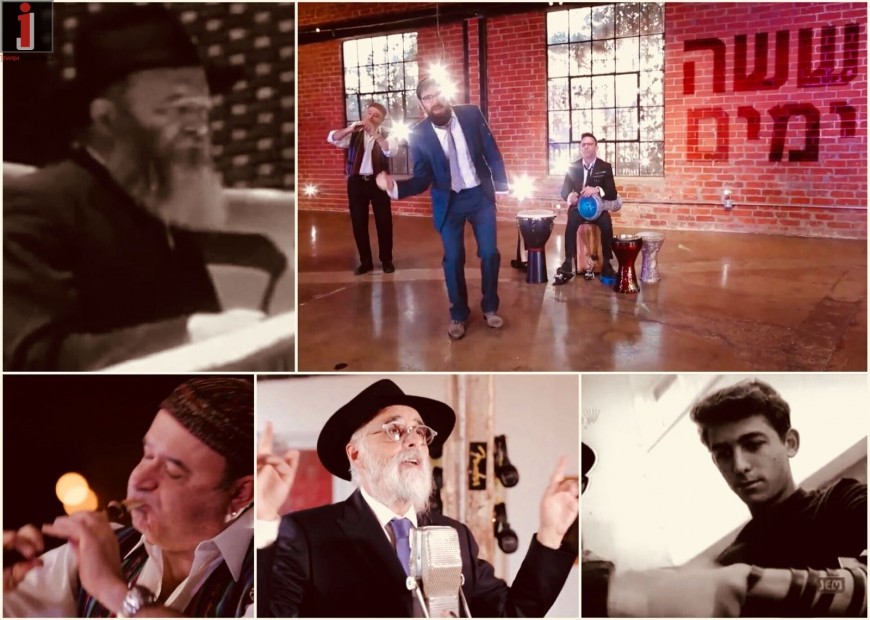
JI Y-Studs – The Greatest Passover

Wednesday, March 28, 2018
Nachum Highlights the New Koren NCSY Siddur with Debbie Stone
Nachum welcomed Debbie Stone, Director of Day School Engagement at New York NCSY and co-author of the new Koren NCSY Siddur, to this morning’s JM in the AM to discuss this important new addition to the Koren siddur line-up. From the OU Press website: “An inspirational collaboration, The Koren NCSY Siddur has been designed as a tool for young people to explore their relationship to their God, their history, the values and religion of their people, and ultimately their own identity. Key innovative features:
–Commentary divided into four categories: Reflection, Connection, Learning, and Photographic commentary on the tefilla
–Unique layout encourages deeper connection to the prayers
–Appendices include: FAQs on tefilla collected from students and adults, practical guide to enhancing one’s kavana, useful bibliography, guide to the Jewish year, stories, and more.
–Thought-provoking questions, narratives, and quotes help the user think and feel beyond the standardized liturgy.
English translation by Rabbi Lord Jonathan Sacks”
With Liberty and Justice
Passover and Shavuot are two acts in the same drama. The Exodus on Passover remains incomplete without the Revelation on Shavuot. Charting the fifty-day count of the Omer between the two holidays, Senator Joe Lieberman – together with Rabbi Ari Kahn – presents fifty short essays on the interplay of law and liberty in our lives. Drawing on the Bible and rabbinic literature, US politics and modern legal theory, Jewish humor and American folklore, the authors follow the annual journey from Egypt to Sinai, illustrating that there can be no liberty without law, no freedom without justice.Order here.
RABBI WEIN ON TZAV 5778
The entire relationship between God and Israel is reflected in the opening verb of this week’s Torah reading. The word “tzav” reflects an attitude of command and of subservience. Even though explanations for the command may be given and understood, the command itself remains viable and imperative no matter what.
RABBI WEIN ON PESACH 5778
One of the more amazing things about the holiday of Pesach is that even though it is over 3300 years old it is relevant and current to our world today just as it was when it was originally celebrated by the Jewish people in Egypt long ago. It naturally speaks to every generation in a different tone and nuance, but its basic message of human freedom and Godly service has never changed.
OU TORAH The Difference Between Tzav and Vayikra Rabbi Menachem Leibtag
Is Parshat Tzav simply a repeat of Parshat Vayikra?
In the following shiur, as we undertake a ‘tedious’ study that will explain how and why they are very different – we will also arrive at several conclusions that will help us appreciate why we eat ‘kosher’ meat.
Introduction
In both Parshiyot Vayikra and Tzav we find an organized set of laws concerning each of the five basic categories of korbanot: OLAH, MINCHA, CHATAT, ASHAM and SHELAMIM. However, in each Parsha, the order and detail of their presentation are quite different.
OU TORAH Shabbat HaGadol as Independence Day By Rabbi Dr. Tzvi Hersh Weinreb
I remember well when the age at which one could vote or drink was 21. From my perspective when I was a child, and frankly eager to do these things, it seemed to be an injustice to set the age bar so high. Twenty-one seemed a long way off.
As time progressed, the age for all of these things became lower and lower. By that time, I was well past the age of 21 and was critical of allowing children these privileges prematurely.
OU TORAH Giving Thanks By Britain's Former Chief Rabbi Lord Jonathan Sacks
The first words we are taught to say each morning, immediately on waking, are Modeh/modah ani, “I give thanks.” We thank before we think. Note that the normal word order is inverted: Modeh ani, not ani modeh, so that in Hebrew the “thanks” comes before the “I.” Judaism is “gratitude with attitude.” And this, according to recent scientific research, really is a life-enhancing idea.
RAV KOOK ON Passover Part 2: The Second Seder in Jerusalem
n the spring of 1934, many Jewish tourists from Europe and the United States traveled to Eretz Yisrael for the Passover holiday. Hundreds ascended to Jerusalem, excited to celebrate the festival in the holy city.
The Jewish National Fund, wishing to properly welcome these guests — and potential donors — decided to organize a Seder for them on the second day (Yom Tov Sheini) of Passover. In order to attract religious Jews, the JNF turned to the Chief Rabbi, requesting that he sponsor the event and supervise the kashruth of the festive meal.
RAV KOOK ON Passover Part 1: Answering the Wise Child
The Haggadah speaks of four children. Each one asks his own question, and each one receives a personal response. Education, the Sages taught, is not something that can be mass-produced like a Model-T.
The first child, the wise son, is troubled by the Torah’s abundance of rituals and minutiae. For the intelligent and rational, everything should be logical. What meaning can there be in these myriad details and rules? “What is the meaning of the rituals, rules, and laws that the Eternal our God has commanded you?” (Deut. 6:20)
RAV KOOK Tzav Part 2: Appreciating Boundaries
One type of offering brought in the Temple was the korban Todah, the Thanksgiving offering:
“This is the law of the Peace offering (Shelamim)... If offered as a thanksgiving offering, then it is presented along with unleavened loaves.” (Lev. 7:11-12)
Who brought this offering? The Talmud mentions several examples:
“Four need to give thanks: those who sail the seas, those who travel through deserts, the sick who are cured, and prisoners who are freed.” (Berachot 54b)
Why did the Sages choose these four situations as examples of individuals who need to publicly thank God?
RAV KOOK ON Tzav Part 1: Guard Your Inner Flame!
A fire was always burning on the Temple altar:
“אֵשׁ תָּמִיד תּוּקַד עַל הַמִּזְבֵּחַ - לֹא תִכְבֶּה.”
“There shall be a constant fire kept burning on the altar; it shall not be extinguished” (Lev. 6:6).
The fire on the Temple altar is a symbol, representing our inner drive for holiness and spirituality.
The kohanim were warned to make sure the altar fire was always burning. We also must guard and cultivate our inner flame:
“The divine thirst, raging and storming with its powerful flame in the heart, must not be extinguished.
A person who extinguishes a burning coal on the physical altar transgresses the prohibition of “There shall be a constant fire... it shall not be extinguished.” All the more so we must never extinguish a lofty spiritual coal on the spiritual altar of the heart, filled with holy life.”
(Orot HaKodesh vol. III, p. 210)
Tuesday, March 27, 2018
Muqata Please Daven
JEM A MOMENT TO SAVE THE WORLD
Starting forty years ago, the Rebbe’s birthday has been marked as “Education Day, USA” by the sitting President of the United States, in recognition of the Rebbe’s tremendous focus on education, especially children – both Jewish and non-Jewish.
The Rebbe publicly acknowledged this honor on multiple occasions, and urgently called for a daily “Moment of Silence” in U.S. public schools, where most American children receive their education. In particular, during the televised Farbrengens, the Rebbe articulated his position with great urgency, all but warning that if the current path of education continues without incorporating a Moment of Silence, calamity is bound to come.
With the rash of school shootings of late, many organizations and Shluchim have noticed skyrocketing interest in understanding the Rebbe’s position on this matter, and have requested a clear summary of the Rebbe’s opinion.
In honor of Yud Alef Nissan, culminating weeks of research, curating, translating, writing and technical work, the JEM content team is pleased to present a fascinating half-hour broadcast summarizing and presenting the Rebbe’s approach to this area that, according to the Rebbe, is absolutely essential to our country’s future.Click here.
Nachum Presented the 2018 Pesach Products Program
Nachum presented the Annual JM in the AM Pesach Products Program with Rabbi Yoel Schonfeld and Rabbi Eli Gersten of the OU, Ronnie & Larry Birnbaum of J-Drugs and Jay Buchsbaum of Royal Wines/Kedem. As always, they covered a wide array of Pesach related topics from the kashrut of specific food items to preparing the home for the holiday. It was an informative, entertaining program that continues to be a listener favorite year after year. To watch the program visit the NSN Facebook page HERE.
Super-Sized Pre-Pesach Live Lunch from Seasons in NJ
Monday, March 26, 2018
Aneinu Please Say Tehillim
Aneinu Please Daven For Little Boy Injured in Apt. FIRE in Israel
Sunday, March 25, 2018
Aneinu Please Daven Surgery Monday Morning
Thursday, March 22, 2018
Aneinu Please Daven
Wednesday, March 21, 2018
OU HOLIDAYS YU TORAH and NAALEH.COM Recognition and Rejoicement By Shira Smiles
An integral part of the Haggadah is the recitation of Hallel comprised of five paragraphs from Psalms. The Hallel begins with the introductory paragraph,”Therefore it is our duty to thank, praise… from slavery to freedom, from sadness to joy, from mourning to festivity, from darkness to great light. Let us/We will therefore recite a new song before Him, Hallelukah.” Immediately following, we recite the first two paragraphs of the Hallel/Praise. This section then concludes with the final words of the blessing, “Go’al Yisroel/Who has redeemed Israel.” We continue the Seder with the Matzah, the bitter herbs, and the festive meal, and conclude with the last three paragraphs of Hallel and Nirtzah/Accept [our observance].
RABBI WEIN ON VAYIKRA 5778
RABBI WEIN ON IT’S THE ZHIDS
One of the more uncanny peculiarities in human history has been that whenever a sinister unexplained event in the world occurs, the Jews are immediately sought out as the scapegoats and the cause of the event. Unfortunately there is a very long and bitter history to this phenomenon. It is so deeply ingrained in parts of the non-Jewish world that even in our time, despite a long history and in the face of logic and fact this type of canard still persists.
OU TORAH Introduction to Sefer Vayikra By Rabbi Menachem Leibtag
OU TORAH Vayikra: Forgiving Fallibility By Rabbi Dr. Tzvi Hersh Weinreb

“I was wrong. I am sorry. Please forgive me.”
These are rare words indeed, but I heard them pronounced clearly by a woman I once worked for, and whom I still admire.
She was the superintendent of a small school district just outside of Washington, DC. Several of the school districts in that geographical area were under a federal court order to guarantee desegregation of the races in the public schools. Believe it or not, the court found that even as late as the early 1970s, proper integration of the races was still not achieved in many of these schools.
OU TORAH The Call By Britain's Former Chief Rabbi Lord Jonathan Sacks
It was never my ambition or aspiration to be a rabbi. I went to university to study economics. I then switched to philosophy. I also had a fascination with the great British courtroom lawyers, legendary figures like Marshall Hall, Rufus Isaacs and F. E. Smith. To be sure, relatively late, I had studied for the rabbinate, but that was to become literate in my own Jewish heritage, not to pursue a career.
RAV KOK ON Vayikra Part 1: Sacrifices vs. Fasting
When the fourth-century scholar Rav Sheshet fasted, he would add the following request to his Amidah (Standing) prayer:
“Master of the Universe! You know that when the Temple stood, a person who sinned would bring a sacrifice. Although only the fats and blood would be offered on the altar, the person would be granted atonement.
“Now I have fasted, and my fat and my blood have diminished. May it be Your Will that the decrease in my fat and my blood should be considered as if I offered them on the altar, and my offering was accepted.” (Berachot 17a)
Rav Sheshet’s prayer is inspiring, but it makes one wonder: Why should one go to the trouble of bringing a sacrifice if the same atonement may be achieved through fasting?
Tuesday, March 20, 2018
Aneinu Please Daven Tests
Monday, March 19, 2018
Sunday, March 18, 2018
Baruch Dayan HaEmes Terror Victim
Muqata Names Terror Victim
Friday, March 16, 2018
Aneinu Whatsapp Group for Rochel bas Chaya Sara.
Thursday, March 15, 2018
Aneinu Ple ase Say Tehillim Serious Surgery
Aneinu Urgent! Please Daven Surgery Now
Ywn TEHILLIM – Vishnitzer Rebbe of Monsey In Extremely Critical Condition
Wednesday, March 14, 2018
Aneinu Urgent Tehillim Tonight
NSN Live from the NBN Mega Event in NYC
Nachum Segal and the NSN staff, in partnership with The Jerusalem Post/jpost.com were live at yesterday’s NBN Mega Event at John Jay College in NYC. They interviewed Nefesh B’Nefesh representatives and prospective Olim as well. Nefesh B’Nefesh continues to be a guiding light an helping hand for our brothers and sisters who want to make their way home. Yesterday’s event was the first of a handful of Aliyah-centric events that NBN will be presenting in North America. Visit their website to find out when they are coming to your neck of the woods. Watch the show HERE.
Nachum and Charlie Harary Explore “Unlocking Greatness”
In anticipation of the launch of Charlie Harary’s new book, Nachum welcomed Charlie, renowned speaker and host of NSN’s Unlocking Greatness, to this morning’s JM in the AM for an in-depth look at his new Rodale Books publication, “Unlocking Greatness: The Unexpected Journey from the Life You Have to the Life You Want.” From the book’s Amazon page: “A guide to successfully getting the life you want by changing your perspective and discovering your ideal self.
More often than not, our own mental obstacles are holding us back from the joy, fulfillment, and meaning that we all crave, but by retooling our perspectives, we gain the ability to see the path toward the life we truly desire. Charlie Harary, business executive, professor, speaker, and radio host, combines the wisdom of science, spirituality, and personal growth in practical and understandable terms so you can take the life you have and make it the life you want.
Everyone has the extraordinary capacity to transform their life. And it’s easier to do than you might think―in order to get what you want, to achieve that sense of greater life satisfaction, all you need to do is learn how to best use the resources you already have. Based on the latest research into the brain’s neuroplasticity, analysis of ancient wisdom, and exploration of the practices of today’s greatest achievers, he offers guidance and inspiration so you can break through the clutter and confusion of your life and find your true purpose.”
Visit Charlie’s website HERE.
OU TORAH YU TORAH NALLEH.COM Introspective Inspiration By Shira Smiles
Adapted by Channie Koplowitz Stein
Parshat Parah introduces us to the ultimate chok, a mitzvah that defies all logic and we accept simply because it is God’s command. In this mitzvah, the kohain takes one who has become defiled through contact with the dead and brings him outside the camp. There he sprinkles on him water that contains ashes from a red heifer, and the man becomes purified. Rabbi Wolfson offers a homiletic interpretation to this ritual. The ultimate Purifier is Hashem Who purifies us from all sin.
RABBI WEIN ON VAYAKHEL – PEKUDEI 5778
The commentators over the ages who have studied every word of the Torah carefully and meticulously particularly note that the review and accounting for the construction of the Mishkan/Tabernacle was preceded by convening all of the Jewish people before Moshe and once again reviewing the laws and importance of Shabbat.
RABBI WEIN ON COSTUMES
Since all of us are still in a somewhat post-–Purim frame of mind, I am taking the liberty of commenting on costumes, past and present that mark the holiday. I received many pictures of my blessed great-grandchildren, all of them dressed in costume. Some were airline pilots and flight attendants while others were mail carriers and even letters. There were a number of Queen Esthers, police people and monkeys, rabbits and other assorted wildlife. Naturally, wearing costumes on Purim is one of the traditions of the joyous holiday.
OU TORAH Black Sabbath By Rabbi Dr. Tzvi Hersh Weinreb

We were walking down the long airport corridor on the way to the boarding gate. Somehow, it seems that whenever my wife and I have a flight to catch, anywhere, our gate is always at the furthest end of the long hall. We had plenty of time until the airplane departed, but somehow I experience an urgent need to rush whenever I am in an airport, and so we were in a hurry.
OU TORAH Making Space By Britain's Former Chief Rabbi Lord Jonathan Sacks
With this week’s double parsha, with its long account of the construction of the sanctuary – one of the longest narratives in the Torah, taking a full 13 chapters – comes to a magnificent climax:
Then the cloud covered the tent of meeting, and the glory of the Lord filled the Sanctuary. Moses could not enter the Tent of Meeting because the cloud had settled on it, and the Glory of the Lord filled the Sanctuary. (Ex. 40:34-35)
That is what the building of the sanctuary was about: how to bring God, as it were, from heaven to earth, or at least from the top of the mountain to down in the valley, from the remote God of awe-inspiring power to the Shekhinah, the indwelling Presence, God as shakhen, a neighbour, intimate, close, within the camp, in the midst of the people.
RAV KOOK ON Pekudei: Always on His Mind
Rabbi Chaim Ozer Grodzinski (1863-1940), the brilliant Lithuanian scholar and posek, was known to write scholarly Halachic correspondence while simultaneously conversing with a visitor on a totally different subject. When questioned how he accomplished this remarkable feat, Rabbi Grodzinski humbly replied that his talent was not so unusual.
“What, have you never heard of a businessman who mentally plans out his day while reciting the morning prayers?”
RAV KOOK ON VaYakhel Part 2: Art and Creation
“Moses informed the Israelites: God has selected Betzalel... and has filled him with a Divine spirit of wisdom, insight, and knowledge in all craftsmanship.” (Ex. 36:30-31)
What exactly were these three gifts of wisdom, insight, and knowledge that God bestowed upon Betzalel? The Sages wrote that the master craftsman was privy to the very secrets of creation. Betzalel knew how to “combine the letters with which the heavens and the earth were created,” and utilized this esoteric knowledge to construct the Tabernacle (Berachot 55a).
We find that King Solomon mentioned the same three qualities when describing the creation of the universe:
“God founded the earth with wisdom; He established the heavens with insight. With His knowledge, the depths opened, and the heavens drip dew. (Proverbs 3:19-20)
What is the difference between wisdom, insight, and knowledge? How do they apply both to the Creator of the universe and to the human artist?
RAV KOOK ON VaYakheil Part 1: Choosing a Leader
Betzalel’s Appointment
God informed Moses of Betzalel’s appointment to oversee the construction of the Tabernacle, and Moses subsequently apprised the people. According to the Midrash (Berachot 55a), however, this was not just a perfunctory notification.
“God asked, ‘Moses, is Betzalel acceptable to you?’ ‘Master of the world,’ exclaimed Moses, ‘if he is acceptable to You, then certainly he is acceptable to me!’ ‘Nevertheless, I want you to speak with the people.’
“So Moses went to the people, and asked them, ‘Is Betzalel acceptable to you?’ ‘If he is acceptable to God and to you,’ responded the people, ‘then certainly he is acceptable to us!’
Monday, March 12, 2018
Aneinu Whatsapp Tehillim group for Yosef Shalom ben Shira Miriam
Sunday, March 11, 2018
Subscribe to:
Comments (Atom)


