Thursday, February 28, 2019
[Aneinu] Please daven for girl in Israel
Wednesday, February 27, 2019
BAIS HAVAAD ON PARSHA PARSHAS KI SISA 5779 Violating Shabbos to Save a Life
The Gemara cites eight pesukim, including the pasuk above, to prove that one may violate Shabbos to save a life. But the Gemara says v’chai bahem is the best, since it includes even cases of safek sakanah, while the others only allow for definite danger.
Is the permission to violate Shabbos hutra or dechuya?
Reb Shlomo's Commentary on this Week's Torah Parsha Parshat Ki Tisa
The Half a Shekel
“This shall they give – everyone who passes through the census – a half of the sacred shekel” (Sh'mos 30:13)
Connecting to what’s already there
In the time of the Holy Temple, each person had to donate a machatzis hashekel. And everyone is asking, why only half?
Imagine I would have to create light. It would be a very heavy thing, but if the light is there and all I have to do is to connect it, it means I only have to do half of it. Something is already there, all I have to do is to plug it in.
Now listen to the deepest depths. Haman came to Achashverosh and said, “I’m giving you 10,000 shekels to wipe out the Jews.” The Medrash says that G-d says to the Yidden, “You give half a shekel and I’ll wipe out all the shekels of Haman.” You know what that means? Evil comes to you and says, “You can’t bring any light into the world with half a shekel. You have to create the whole thing on your own, which is not simple at all. Don’t kid yourself, you won't make it in your lifetime.” So here I come and I say, “The world is filled with light. All I have to do is to connect to it, it’s right here.”
I want you to know, it’s also so true between people. If I have to create love and the other person has to create love, it’s very heavy, we will never make it. The world filled us with love. All you need is this half a shekel, this little connection, this little bit of plugging in.
Do you know what happened to us on Purim? LaYehudim hayesa orah v'simcha v'sason Veyikar. (Esther 8:16. On Purim we realized the whole world is filled with light. Every little good thing you are doing connects you to the highest light there is. Some people think I have to work like a dog and cut myself into pieces for two thousand years until I smell or feel a little bit of light. The light is right here, you just have to connect.
OU TORAH YU TORAH and NAALEH.COM Gracious Gift By Shira Smiles
Adapted by Channie Koplowitz Stein
Bnei Yisroel have accepted the Torah, the Torah has been transmitted to Moshe Rabbenu, and Moshe is about to descend Mount Sinai and return to Bnei Yisroel. “And Hashem gave to Moshe when He finished /kechaloto speaking with him on Mount Sinai the two Tablets of Testimony…”
Our commentators are puzzled by the placement of the word kechaloto. While the simplest translation renders it as “when he finished”, the literal translation is awkward. This adverbial phrase would more fittingly come at the beginning of the sentence, i. e. “When He finished speaking, Hashem gave…” or at the end of the entire verse. Rashi therefore understands the word to be related to a bride, to (ch)kallah. Rashi therefore explains that Hashem gave Moshe the Torah as a gift, as a bride is to her groom. Just as it would be impossible to fully know and appreciate one’s spouse in a short period of time immediately after the wedding, so would it have been impossible for Moshe to have learned all of Torah in just forty days and nights. Therefore, Moshe’s knowledge and understanding of the Torah was an actual gift Hashem gave him so that he could then transmit that knowledge to Bnei Yisroel. Later commentators draw upon this rendering to provide beauty and depth to the study of Torah, often compared to a bride of Bnei Yisroel.
RABBI WEIN ON KI TISA 5779
Population numbers do matter and they matter greatly. This is undoubtedly one of the many messages communicated to us in the Torah reading of this week. We see throughout the Torah that the Jewish people are counted often and in fairly exact detail. This is because there is an obvious lesson that has to be absorbed within Jewish society and that is that in order for Judaism and its value system to continue to operate and be of influence in world society, there must be a physical Jewish people.
RABBI WEIN UNFINISHED BUSINESS
I have often been perplexed by the statement of the rabbis in Avot that says: “It is not incumbent upon you to complete the work, “ as there is another statement of the rabbis of the Talmud that if one begins to do a good deed, one should persevere to complete it. So, what should our attitude towards unfinished business be? And should a project or endeavor be started when it may be clear that it will be unable to be completed in one’s lifetime. Here we have another statement of the Talmud about a man that was planting a tree that would take 70 years to mature and produce fruit. When he was asked why he was doing so, for in the course of human mortality he would not live long enough to benefit from the tree, he answered that his forefathers had planted such trees before him and that he was therefore planting such a tree for the benefit of later generations that would succeed him.
VBM The Golden Calf and the Mishkan By Harav Yaakov Medan
I. When was the command to build the Mishkan issued?
The commentators struggled with the question of whether the command to build the Mishkan (chapters 25-31) was given during the period of Moshe's first ascent to Mount Sinai – before the sin of the golden calf (chapter 32) – or perhaps only during the period of his third ascent in order to receive the second set of tablets – in the wake of the sin of the golden calf. In practice, the building of the Mishkan began only after Moshe's third descent from the mountain, but when was the command to build the Mishkan issued? This question is related to another question: Is the Mishkan a reaction to the sin of the golden calf, or did the idea of the Mishkan precede the golden calf, such that there is no connection between the two?
VBM Aharon’s Part (and Ours) in the Episode of the Golden Calf By Harav Yaakov Medan
Aharon’s mistake
Aharon’s conduct in our parasha is examined at great length by ibn Ezra. How could Aharon have erred as he did? And how is it that he not only goes unpunished, but is in fact given great honor, having the high priesthood bestowed on him?[1] The justification that ibn Ezra offers seems rather forced, and we will propose a different way of understanding the events.
OU TORAH Ki Tisa: Chet HaEgel and the 13 Midot of Rachamim By Rabbi Menachem Leibtag
No matter how one explains the story of ‘chet ha-egel’ [the sin of the Golden Calf], we encounter a problem.
If we understand (as the psukim seem to imply) that Bnei Yisrael truly believed that it was this ‘golden calf’ (and not God) who took them out of Egypt – then it is simply hard to fathom how an entire nation would reach such a senseless conclusion!
But if we claim (as many commentators do) that Aharon had good intentions, for he only intended for the ‘egel’ to be a physical representation of God (who took them out of Egypt) – then why is God so angered to the point that he wants to destroy the entire nation!
In this week’s shiur, we look for the ‘middle road’ as we attempt to find a ‘logical’ explanation for the events as they unfold, based on our understanding of the overall theme of Sefer Shmot.
OU TORAH Who is Chur? By Rav Moshe Twersky, HY"D
The pasuk is making a point to trace Betzalel’s lineage back to his grandfather, Chur. This is not the first time we discover Chur. At the end of parshas Beshalach (17:12), Aharon and Chur held up Moshe Rabbeinu’s arms while Yehoshua led the battle against Amaleik. At the end of parshas Mishpatim, Moshe Rabbeinu tells the People that, while he is gone, anyone who has a din Torah that needs to be settled should bring it to Aharon and Chur. Also in parshas Ki Sisah, Chur comes up. Rashi brings the Medrash that what Aharon saw (32:5) is the murder of Chur when he rebuked the People for wanting to make the eigel ha’zahav.
Who was Chur? He was the son of Miryam and Kaleiv. Rashi tells us so three times! In Beshalach, in Mishpatim, and also in Vayakhel (35:30) when the pasuk mentions that Betzalel is the grandson of Chur. Throughout Shas, Rashi repeats explanations and does not rely on your memory. Once it’s two or three daf away from where he first explained it, Rashi does not hesitate to explain again. Sometimes, if it is a lengthy exposition, he’ll tell you, “I already explained this in such and such place.” That is certainly quite reasonable. Otherwise, though, he reiterates things often and does not rely on us to remember what was said. Rashi was Rashi. As such, it is not really such a kashya that Rashi tells us who Chur was three times. However, it is possible that there is a specific significance to the fact that Rashi “introduces” us to Chur three times.
The three times that Chur is mentioned being involved in something represent three different capacities that he filled. The first one, chronologically speaking, is when Moshe Rabbeinu appointed him – together with Aharon – as the authority for dinei Torah. True, it was before Matan Torah, but they still had what they had. Sheva mitzvos, Shabbos, Parah, and certain dinim. And those halachos needed arbitration. That was Chur functioning in the capacity of koach ha’Torah.
Next, is the capacity of the power of teffilah. The Medrash says that Moshe va’chaveirav went up to daven for Klal Yisrael when they fought against Amaleik. That is quite a statement. The Rambam makes clear that Moshe Rabbeinu was the adon ha’neviim – possessed of his singular manifestation of nevuah – already from the time he went to Mitzrayim to redeem the People. It makes sense that once he was the adon ha’neviim, he didn’t have any “friends”. Yet because they davened together with him, they are called his friends. And who were those friends?
OU TORAH Parshas Ki Sisa By Rav Moshe Twersky, HY"D
The Ramban explains that the expression “machatzis ha’shekel b’shekel ha’kodesh” is to be understood in the context of the Biblical shekel’s status of being employed to establish requisite values for arachin, pidyon ha’ben, the Mishkan, and every monetary value prescribed in the Torah. That, explains the Ramban, is why it is called shekel ha’kodesh, because it is the barometer and used for all these things which are kodesh. That too, adds the Ramban, is the reason why Chazal refer to the language of the Torah as lashon ha’kodesh – because all the words of Torah, Neviim, and all words of kedusha are expressed in that language. It is the language in which Ha’Kadosh Baruch Hu communicates with His neviim and His people, it is the language in which the names of Hashem are expressed, it is the language with which Hashem created the universe and designated identifying names for all its component parts, and all of the malachim and the holy people such as Avraham, Yitzchak, Yaakov, Shlomo, and all the rest. The Rambam in Moreh Ha’nevuchim on the other hand, continues the Ramban, says that it is called lashon ha’kodesh because it does not contain any words to describe the reproductive organs, reproductive fluids, or excretory matter – other than in the form of sobriquets.
OU TORAH The Inevitable Comedown By Rabbi Dr. Tzvi Hersh Weinreb

It was over forty years ago, but I remember the feelings very well. They were overwhelming, and were not dispelled easily.
It was just after I had completed all of my course requirements and dissertation defense in the process of obtaining my doctorate in psychology. Like any graduate school experience, this was the culmination of several years of study and hard work. The ordeal was now over, and a celebration was in order.
And celebrate I did, together with my wife, my young children, several other students, and assorted friends. But then, the celebration was suddenly over. I found myself inexplicably moody and depressed. A sense of emptiness enveloped me. At first I thought it was just a result of a transition from a state of being busy to a state of boredom.
OU TORAH A Stiff-Necked People By Britain's Former Chief Rabbi Lord Jonathan Sacks
Covenant & Conversation: Family Edition is a new and exciting initiative from The Office of Rabbi Sacks for 5779. Written as an accompaniment to Rabbi Sacks’ weekly Covenant & Conversation essay, the Family Editionis aimed at connecting older children and teenagers with his ideas and thoughts on the parsha. Each element of the Family Edition is progressively more advanced; The Core Idea is appropriate for all ages and the final element, From The Thought of Rabbi Sacks, is the most advanced section. Each section includes Questions to Ponder, aimed at encouraging discussion between family members in a way most appropriate to them. We have also included a section called Around the Shabbat Table with a few further questions on the parsha to think about. The final section is an Educational Companion which includes suggested talking points in response to the questions found throughout the Family Edition.It is a moment of the very highest drama. The Israelites, a mere forty days after the greatest revelation in history, have made an idol: a Golden Calf. God threatens to destroy them. Moses, exemplifying to the fullest degree the character of Israel as one who “wrestles with God and man,” confronts both in turn. To God, he prays for mercy for the people. Coming down the mountain and facing Israel, he smashes the tablets, symbol of the covenant. He grinds the calf to dust, mixes it with water, and makes the Israelites drink it. He commands the Levites to punish the wrongdoers. Then he re-ascends the mountain in a prolonged attempt to repair the shattered relationship between God and the people.
RAV KOOK ON Ki Tisa Part 2: The Copper Washstand
“Make a copper washstand, along with a copper base for it. Place it between the Altar and the Communion Tent, and fill it with water for washing. Aaron and his sons must wash their hands and feet from it.” (Ex. 30:18-19)
Most of the Temple vessels were fashioned from gold and silver. Why was the Kiyor, the Washstand, made out of copper? Why was it placed between the Altar and the Sanctuary?
RAV KOOK ON Ki Tissa Part 1: When Bad Things Happen to Good People
After Moses succeeded in petitioning God to forgive the Jewish people for the sin of the golden calf, he made an additional request from God: “If You are indeed pleased with me, allow me to know Your ways” (Ex. 33:12).
What exactly did Moses desire to know? The Talmud (Berachot 7a) explains that Moses wanted to understand the age-old problem of reward and punishment in this world:
“Master of the Universe, why is it that some righteous people prosper, while others suffer? Why do some wicked people prosper, and others suffer?”
Aneinu Please Daven for Chief Rabbi of Argentina
Tuesday, February 26, 2019
Aneinu Urgent Tehillim Request
Fwd: {Be'er Mayim Chaim} Noam Elimelech Yahrzeit Hillula
Sent from my Sprint Samsung Galaxy Note8.
-------- Original message --------
From: Rabbi Tal Zwecker <tal.zwecker@gmail.com>
Date: 2/26/19 12:18 PM (GMT-06:00)
To: beermayimchaim@googlegroups.com
Subject: {Be'er Mayim Chaim} Noam Elimelech Yahrzeit Hillula
Today is the Yahrzeit Hillula of the author of Noam Elimelech, Rav Elimelech son of Eliezer Lipman ZYA
Please study and pass onhttps://torahdownloads.com/assets/material/Mipeninei%20Noam%20Elimelech%20-%20Translation%20of%20Sefer%20Noam%20Elimelech.pdf
Kol Tuv,
R' Tal Moshe Zwecker
Director Machon Be'er Mayim Chaim Publishing
Chassidic Classics in the English Language
www.chassidusonline.com
chassidusonline@gmail.com
in Israel: 972-58-322-1218 (sorry no sms)
Kol Tuv,
R' Tal Moshe Zwecker
Director Machon Be'er Mayim Chaim Publishing
Chassidic Classics in the English Language
www.chassidusonline.com
chassidusonline@gmail.com
in Israel: 972-58-322-1218 (sorry no sms)
If I am in the USA 516-388-8814 ( sms yes)
Help Fund a New Project https://thechesedfund.com/cause/new-english-noam-elimelech-on-parsha-moadim
Free Audio Shiurim http://torahdownloads.com/s-276-rabbi-tal-moshe-zwecker.html
join the mailing list here: http://groups.google.com/group/beermayimchaim
Author Page https://www.amazon.com/-/e/B003VH9D48
Help Fund a New Project https://thechesedfund.com/cause/new-english-noam-elimelech-on-parsha-moadim
Free Audio Shiurim http://torahdownloads.com/s-276-rabbi-tal-moshe-zwecker.html
join the mailing list here: http://groups.google.com/group/beermayimchaim
Author Page https://www.amazon.com/-/e/B003VH9D48
--
You received this message because you are subscribed to the Google
Groups "Be'er Mayim Chaim" group.
To post to this group, send email to tal.zwecker@gmail.com
To unsubscribe from this group, send email to
beermayimchaim-unsubscribe@googlegroups.com
For more options, visit this group at
http://groups.google.com/group/beermayimchaim?hl=en
AddThis Button
http://www.addthis.com/bookmark.php?v=250&username=talz11&url=http%3A%2F%2F&title=
---
You received this message because you are subscribed to the Google Groups "Be'er Mayim Chaim - Torah & Chassidus" group.
To unsubscribe from this group and stop receiving emails from it, send an email to beermayimchaim+unsubscribe@googlegroups.com.
For more options, visit https://groups.google.com/d/optout.
Aneinu Please Daven Surgery Today
Monday, February 25, 2019
Fwd: Video! Travel back to 2005 and relive the 11th Siyum Hashas
---------- Forwarded message ---------
From: Agudath Israel of America <siyumhashas@agudathisrael.org>
Date: Mon, Feb 25, 2019, 6:22 PM
Subject: Video! Travel back to 2005 and relive the 11th Siyum Hashas
To: <agentemes4@gmail.com>
From: Agudath Israel of America <siyumhashas@agudathisrael.org>
Date: Mon, Feb 25, 2019, 6:22 PM
Subject: Video! Travel back to 2005 and relive the 11th Siyum Hashas
To: <agentemes4@gmail.com>
| Experience the incredible 11th Siyum Hashas like never before | |||||||||||||||||||||||||||||||||
| |||||||||||||||||||||||||||||||||
|
Sunday, February 24, 2019
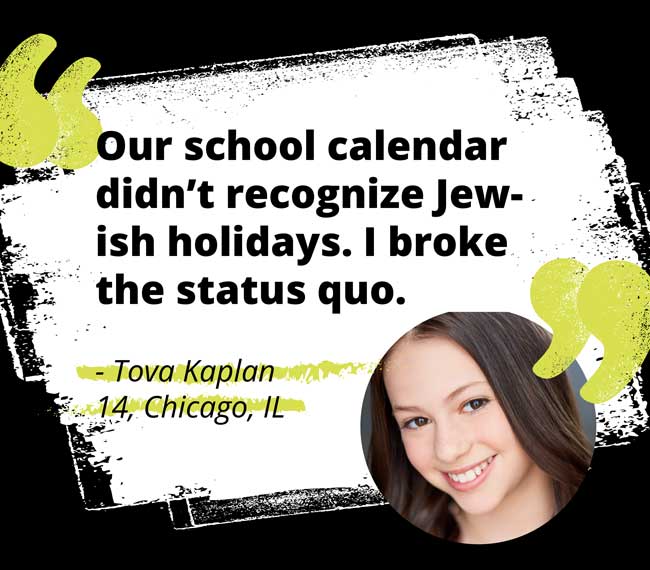
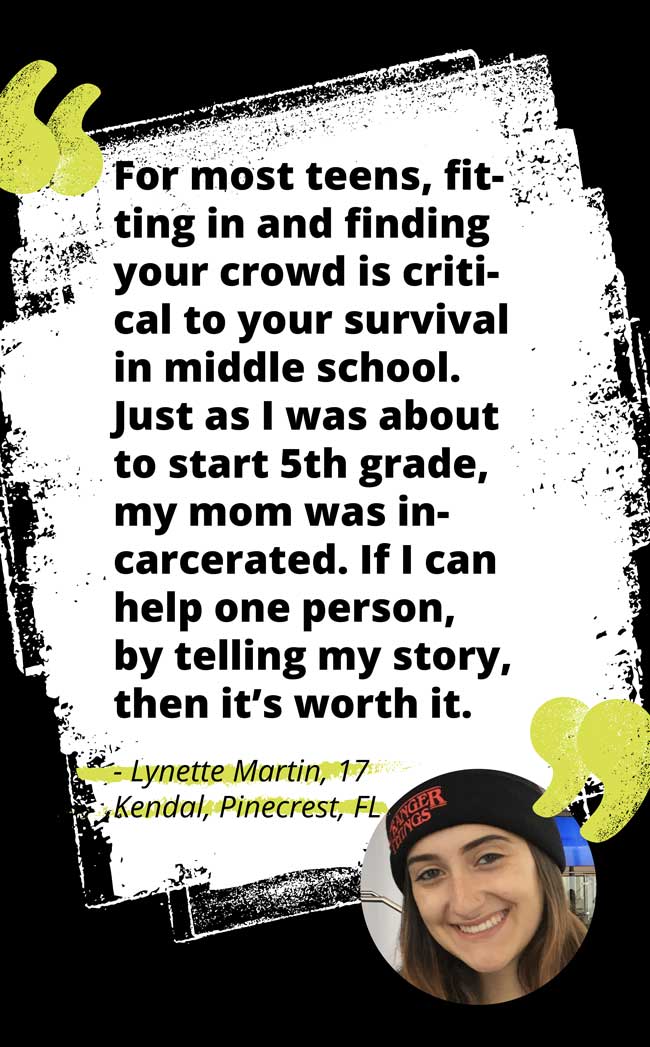
Fwd: "My mom overdosed. Today I will share my story"
Sent from my Sprint Samsung Galaxy Note8.
-------- Original message --------
From: "Chabad.org" <inspiration@chabad.org>
Date: 2/24/19 8:47 AM (GMT-06:00)
To: mates57564@aol.com
Subject: "My mom overdosed. Today I will share my story"
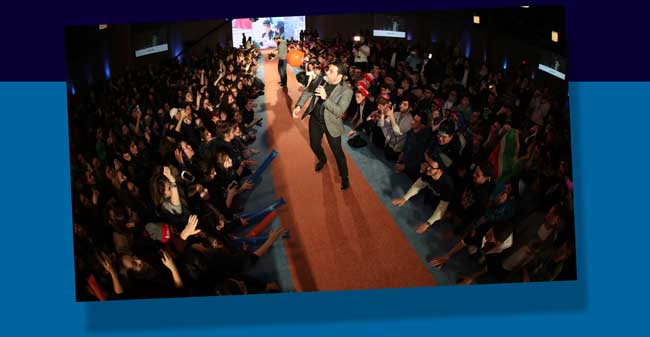
The annual Jewish Teen "I Matter" event showcases stories from Jewish Teens that have risen above their challenges and are leading by example.
| View Online Version |
|
Saturday, February 23, 2019
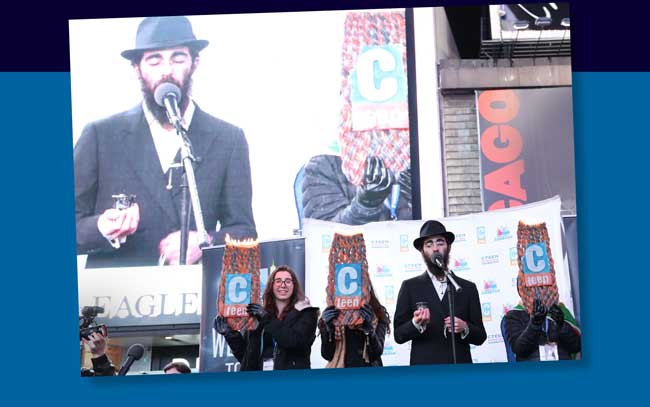
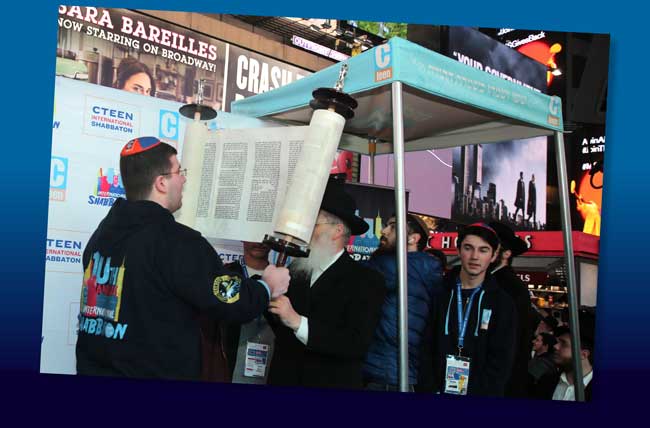
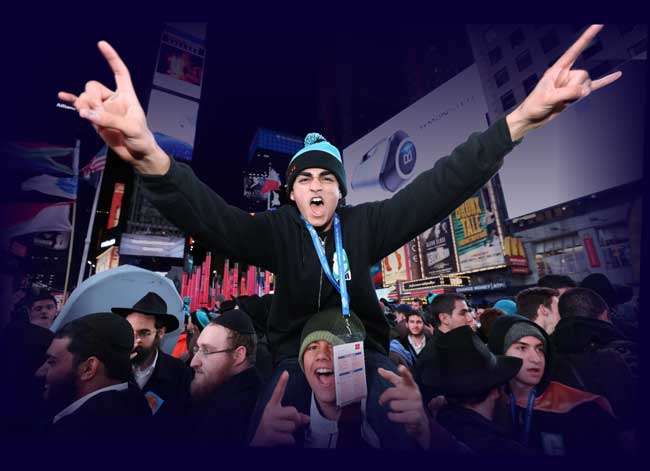
Fwd: WATCH NOW: Jewish pride in Times Square
Sent from my Sprint Samsung Galaxy Note8.
-------- Original message --------
From: "Chabad.org" <inspiration@chabad.org>
Date: 2/23/19 8:52 PM (GMT-06:00)
To: mates57564@aol.com
Subject: WATCH NOW: Jewish pride in Times Square
Two thousand Jewish teens from across the globe are gathering in the heart of NYC in a global display of Jewish unity and pride.
| View Online Version |
|
Friday, February 22, 2019
Aneinu Kidney Donor Needed
Thursday, February 21, 2019
Subscribe to:
Comments (Atom)