Summarized by Daniel Herman. Translated by David Strauss
Our parasha is a direct continuation of the previous one, with God opening with His promise to keep the covenant He had made with the Patriarchs and liberate their descendants from their enslavement to Egypt. However, a section is inserted at the beginning of the parasha that reminds us of the book of Bereishit: a description of lineages, starting with Reuven and Shimon and ending with a very detailed description of the tribe of Levi.
The description is exceedingly precise – it includes the names of the women, all the children, and the ages of death – and it seems to be modeled after the descriptions of the family of the Patriarchs. Indeed, the book of Shemot is the book of the selection of the tribe of Levi: Moshe Rabbeinu and Aharon the Priest, two of the greatest leaders of the nation, are chosen from this tribe, while the members of the tribe as a whole are "promoted" to the status of "servants of God."
This matter is not at all simple: in the book of Bereishit, Levi is not portrayed in a particularly positive light, and at best he is a son of Yaakov like all the other tribes. The Torah does not tell us what is unique about Levi. The selection of Avraham can be explained, as can that of Yitzchak and Yaakov, but it would seem that this is not the case with the tribe of Levi.
At the end of the first chapter of Hilkhot Avoda Zara, the Rambam explains the grounds for this selection:
[Avraham] would explain [his statements] to each one of them according to their understanding, until they turned to the path of truth. Ultimately, thousands and myriads gathered around him. These are "the men of the house of Avraham" (Bereishit 17:23). He planted in their hearts this great fundamental principle, composed texts about it, and taught it to Yitzchak, his son. Yitzchak also taught others and turned their hearts to God. He also taught Yaakov and appointed him as a teacher. Yaakov taught others and turned the hearts of all those who gathered around him to God. He also taught all of his children. He selected Levi and appointed him as the leader. He established him as the head of the academy to teach them the way of God and observe the mitzvot of Avraham. Yaakov commanded his sons that the leadership should not depart from the descendants of Levi, so that the teachings would not be forgotten. (Hilkhot Avoda Zara 1:3)
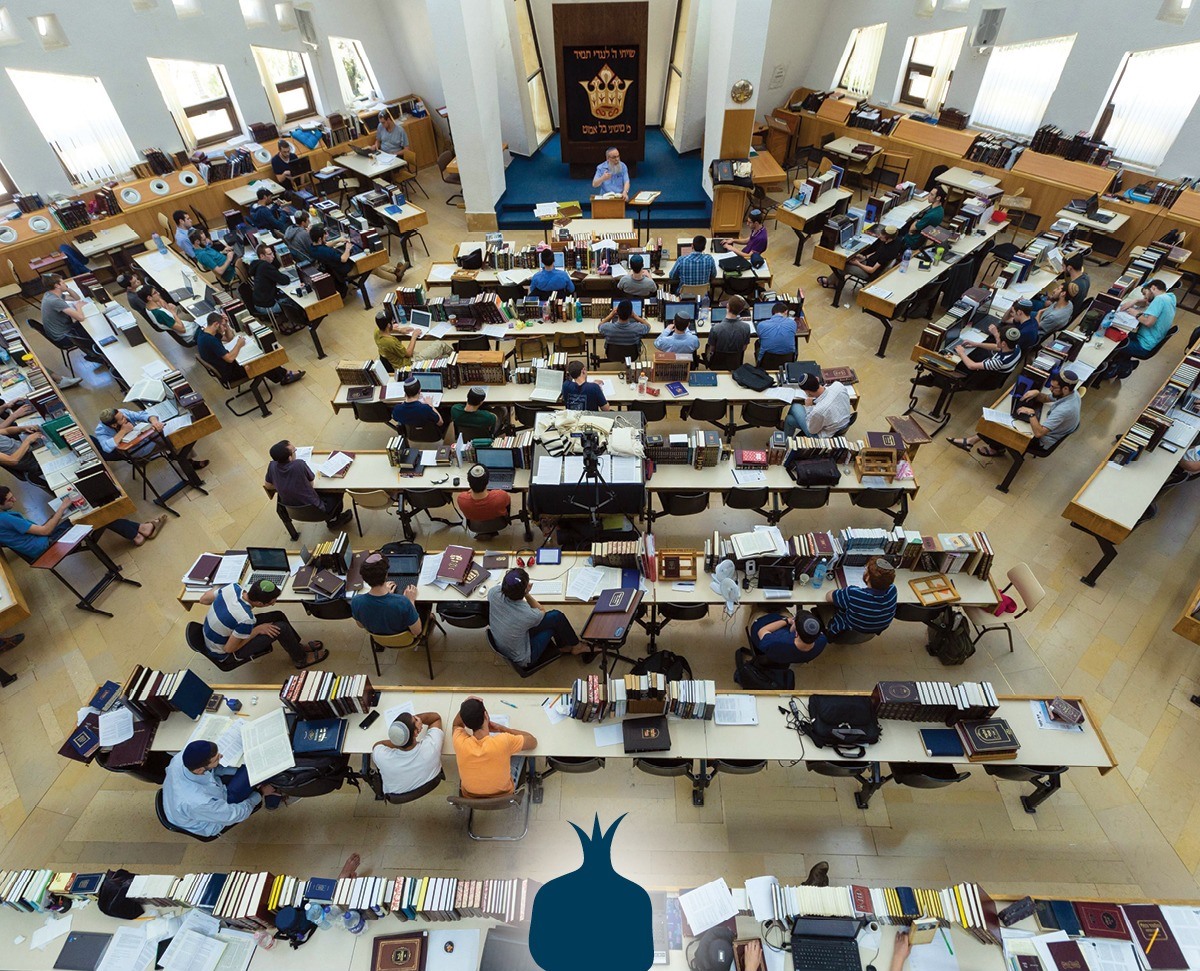
Levi is portrayed here as continuing the tradition of Avraham, continuing the education to the service of God and His recognition. The Rambam goes even further when he tells us that Yaakov appointed Levi to serve as the head of a yeshiva, a claim for which no source is found in Scripture or in the words of Chazal. What does all this mean?
The book of Bereishit repeatedly emphasizes that the Israelites did not dwell in the land of Egypt proper, but rather in the land of Goshen, apparently in order to preserve their uniqueness. However, already at the beginning of the book of Shemot, there seems to be a change:
And Yosef died, and all his brothers, and all that generation. And the children of Israel were fruitful, and increased abundantly, and multiplied, and waxed exceeding mighty; and the land was filled with them. (Shemot 1:6-7)
When Yosef died, and with him the last of the sons of Yaakov, their descendants and their descendants' descendants grew in numbers until they filled the land – the entire land of Egypt. It is no coincidence that these two things happened together – the foundations of the past, the direct connection to the forefathers and the people of the land of Canaan, disappeared, and with them the uniqueness of Israel slowly faded.
Egyptian culture was highly developed and most attractive to the eyes and hearts of the children of Israel, and once the spell was broken and the foundations were removed, they flocked to it. All of them, except one. As in the sin of the golden calf, where the tribe of Levi did not succumb to the advice of the masses and did not break out in dance around the calf, so too here they did not forget the education they had received from time immemorial, and did not follow the abominations of Egypt.
It would seem that this is the image of the Levite throughout the generations. When Yehoshafat seeks to return the Torah to all parts of the people, to teach it to them and to bring them closer to their Father in heaven, the Levites are chosen for the mission:
Also in the third year of his reign he sent his princes, even Ben-Chayil, and Ovadya, and Zekharya, and Netanel, and Mikhayahu, to teach in the cities of Yehuda; and with them the Levites, even Shemayahu, and Netanyahu, and Zevadyahu, and Asahel, and Shemiramot, and Yehonatan, and Adoniyahu, and Toviyahu, and Tov-Adoniya, the Levites; and with them Elishama and Yehoram, the priests. And they taught in Yehuda, having the book of the law of the Lord with them; and they went about throughout all the cities of Yehuda, and taught among the people. (II Divrei Ha-Yamim 17:7-9)
And when the prophet Malakhi describes the role of the priests of the tribe of Levi, he describes it as follows:
Know then that I have sent this commandment to you, that My covenant might be with Levi, says the Lord of hosts. My covenant of life and peace was with him, and I gave them to him, and fear, and he feared Me, and was afraid of My name. The law of truth was in his mouth, and unrighteousness was not found in his lips; he walked with Me in peace and uprightness, and did turn many away from iniquity. For the priest's lips should keep knowledge, and they should seek the law at his mouth; for he is the messenger of the Lord of Hosts. (Malakhi 2:4-7)
Just as Avraham Avinu, who was chosen "to the end that he may command his children and his household after him, that they may keep the way of the Lord, to do righteousness and justice" (Bereishit 18:19), so too are the Levites responsible for the dissemination and study of the Torah among the people. The tribe of Levi did not attain this greatness by virtue of grace or lineage, but solely by virtue of its willingness to stand up against the waves of change that inundate the people of Israel, even at personal cost. This is the quality that Moshe recognizes, and with which he blesses Levi at the end of his life:
And of Levi he said: Your Tumim and Your Urim be with Your holy one, whom You did prove at Massa, with whom You did strive at the waters of Meriva; who said of his father, and of his mother: I have not seen him; neither did he acknowledge his brothers, nor knew he his own children; for they have observed Your word, and keep Your covenant. They shall teach Yaakov Your ordinances, and Israel Your law; they shall put incense before You, and whole burnt-offering upon Your altar. (Devarim 33:8-10)
He who seeks to stand with the tradition of his fathers against all odds, he who volunteers for the great missions that confront the people of Israel, must know how to give up at times comfort and family closeness. The Levites stood before the abominations of Egypt and said "no," and so they stood before the golden calf and said "no."
Such trials are faced not only by them; in every generation people are required to stand up for tradition and sacrifice of themselves for its sake. We will conclude with the words of the Rambam at the end of the book of Zera'im, in which he emphasizes the possibility that lies at the doorstep of each and every one of us:
Not only the tribe of Levi, but any one of the inhabitants of the world whose spirit generously motivates him and who understands with his wisdom to set himself aside and stand before God to serve Him and minister to Him and to know God, proceeding justly as God made him, removing from his neck the yoke of the many reckonings which people seek, he is sanctified as holy of holies. God will be His portion and heritage forever and will provide what is sufficient for him in this world like He provides for the priests and the Levites. And thus David declared (Tehillim 16:5): "God is the lot of my portion; You are my cup, You support my lot." (Hilkhot Shemitta ve-Yovel 13:13)
[This sicha was delivered by Harav Yaakov Medan on Shabbat Parashat Vaera 5777.]
Edited by Yair Lichtman







No comments:
Post a Comment